

Over 1500 key exchange locations nationwide
Sydney's Lockbox Ban: Why KeyNest Is the Only Real Alternative
KEY SUMMARY
- The Ban: Sydney has confirmed its lockbox ban, giving owners until 1 April 2027 before council begins removing them from public infrastructure.
- What's banned: Lockboxes attached to poles, signs, fences, street trees, tree guards, and bike racks, anywhere chained to council property.
- The Solution: KeyNest is the clear, compliant alternative already operating across Sydney, with every key exchange happening inside a vetted local business rather than on public property.
- Proven Elsewhere: When Melbourne banned lockboxes in 2024, hosts and property managers turned to KeyNest in large numbers, the same playbook now available in Sydney before enforcement even begins.
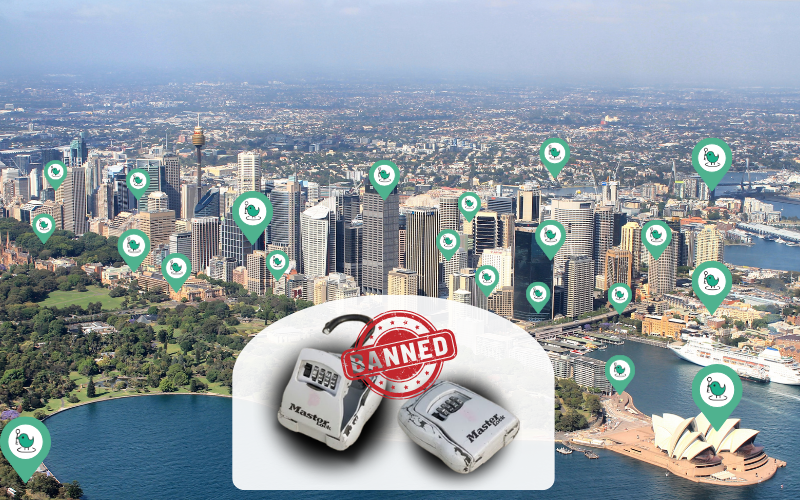
Sydney has confirmed a lockbox ban, effective 1 April 2027, giving property managers and hosts a lead time to find an alternative before council workers start removing boxes from public infrastructure.
For anyone in that position, the choice is straightforward: KeyNest already operates a fully compliant network across the city, with every key exchange happening inside a vetted local business, and keys stored inside a smart locker.
Why Sydney is Cracking Down on Lockboxes
Lockboxes have become an increasingly common sight on Sydney's streets, attached to street signs, poles, fences, and railings across the city. In its recent crackdown, the City of Sydney pointed to several concrete problems this has created:
Safety. Lockboxes on footpaths can create trip hazards and clutter for pedestrians.
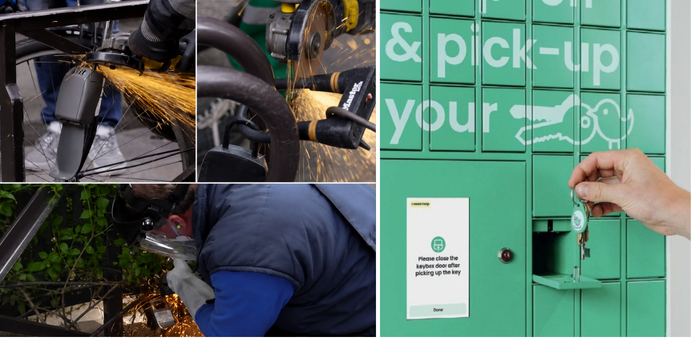
Infrastructure damage. Mayor Clover Moore pointed to a lockbox drilled directly into a tree, causing damage to public property.
Maintenance access. Lockboxes can get in the way of council workers maintaining public assets.
What Lord Mayor Clover Moore Says About the Lockbox Ban
Lord Mayor Clover Moore cited safety concerns as the main reasoning behind the ban:
"Lockboxes on our infrastructure are unsightly and can create safety risks like trip hazards or obstruction. They can interfere with our ability to maintain City of Sydney assets and they can damage the things they are chained to, we've even had an instance of one being drilled into a street tree."
The Deadline to Remove Lockboxes in Sydney
From 1 April 2027, council staff can remove any lockbox posing an immediate safety or access risk straight away, with non-compliant boxes impounded for 28 days before disposal. Owners aren't notified individually, the responsibility sits with hosts and agents to move their key handover process before the deadline hits.
What Does It Mean for Short-Term Rentals in Sydney?
Beyond the immediate check-in headache, this ban affects where Sydney's STR industry is heading:
Raises the operational floor: This will force property managers and hosts using lockboxes to find an alternative, pushing operations to become more professional and structured.
Moving from lightly-regulated to closely-monitored: Paired with proposed suburb-level bans and a review of the 180-day cap, the ban is part of a bigger shift: more scrutiny across Sydney's STR market.
Hits price-sensitive hosts hardest: Most lockbox users are price-sensitive. Losing that option means they now need to find something secure and compliant, but still affordable.
Sets a precedent other councils may follow: Melbourne has already banned lockboxes on public infrastructure; Sydney doing the same makes it more likely other Australian councils follow, turning this into an industry-wide expectation.
Melbourne Already Showed What Happens Next
Sydney isn't the first Australian city to make this call.
Melbourne banned the same practice back in 2024, with fines of up to $1,000 for hosts who didn't comply in time.
The City of Melbourne directed owners to remove lockboxes attached to public infrastructure, warning that any left in place would be confiscated and destroyed after a two-week grace period.
After the deadline, lockboxes across Melbourne began to be removed, while many hosts and property managers switched to alternative ways of handling key handovers. More than 1,000 hosts switched to KeyNest before and after enforcement began, moving their key handovers into KeyNest’s local network instead.
KeyNest: A Solution Already Working Across 30+ Countries
Sydney isn't the first city to ban lockboxes. KeyNest has been the primary alternative whenever regulations shift, stepping in to provide hosts with a secure, affordable, fully compliant key-exchange solution across many cities like Melbourne, Paris, Dublin, Marseille, Lille, Nice, Annecy, Biarritz, Milan, Rome, and many others.
With over a decade of hands-on experience in the short-term rental industry, KeyNest now operates in more than 30 countries and 800+ cities worldwide. As an official Airbnb partner with a 4.9-star rating, we give hosts and property managers complete peace of mind with trusted, seamless guest access.
How KeyNest Solves This in Sydney
KeyNest Points operate inside real, vetted local businesses, cafes, convenience stores, or petrol stations - here’s how it works as an effective replacement to lockboxes in Sydney:
Official Airbnb HostAssist partner. KeyNest has held this status since 2017, with direct API integration for managing keys from within your existing Airbnb account.
A decade of experience. KeyNest has been solving key access for the short-term rental industry for over 10 years.
No public footprint. Keys are stored inside a business premises, rather than chained to council property.
A full digital audit trail. Every key movement is logged automatically, the kind of record an insurer or a council might reasonably ask for, and a lockbox simply can't provide.
24/7 access, without the street hardware. Guests, cleaners, and contractors collect a key using a unique code, the same convenience, without the liability.
Total control over your keys. Full digital key history and real-time notifications mean you always know exactly where a key is and who has it.
Fast to set up. Request a new KeyNest Point and get it live within 2 weeks.
An affordable alternative. KeyNest Points start from just $14.99 per key, a fraction of the $400+ an emergency locksmith call-out can cost.
Already established across the city. KeyNest has a growing footprint across Sydney, so switching doesn't mean waiting for coverage to catch up to you.
Who uses KeyNest?
From specialised operators to large-scale property managers, KeyNest is trusted across the short-term rental and property management industry in Australia, and has been an official Airbnb HostAssist partner for almost a decade.
- Tahir Jat, Team Lead for Property Experience, MadeComfy
"What I appreciate most about KeyNest is its simplicity. Guests can drop off their keys at a local store, and MadeComfy then receives real-time updates about guest check-ins via the mobile app."
- Rachel Thompson, Office Manager, Platino Properties
"The fact that we could manage everything online, track who had access to the keys, and monitor real-time activity was exactly what we needed."
Three Steps to Switch to KeyNest
Find your nearest Point. Check the map to see which KeyNest Point is closest to your property.
Set up your account. Register a key and generate your first collection code, no hardware to install, no waiting on a technician.
Send guests their code. Share the magic link or code with guests, cleaners, or contractors, and every handover is tracked automatically from day one.
Let's Work Together
Remember, you've got until 1 April 2027 to make the switch, but there's no reason to wait until the deadline forces your hand.
Check the map and find your nearest KeyNest Point
Request a new Point if there isn't one close enough yet
Give us a call and we'll talk you through the switch
FAQ
-
Council can impound it for up to 28 days. Switching before then means you're never caught without a working handover process.
-
It takes minutes. Sign-up, find your nearest point, register a key, and send your first collection code.
-
Not really. Guests are sent a code and directions to a real address rather than instructions for hunting down a lockbox.
-
Yes. Keys are stored inside real, vetted local businesses or in a KeyNest Locker, both with full digital audit trails logging every collection and return, something a lockbox can't provide.
-
KeyNest Points start from a low monthly cost per key, a fraction of what a single emergency locksmith call-out runs, with no hardware to buy or install upfront.