
Over 1500 key exchange locations nationwide
Which is Better for Property Managers: Smart Locks or KeyNest Points?
The Comprehensive 2026 Comparison Guide
Key Summary
- The Hardware Trap - Smart locks suffer from Wi-Fi outages, dead batteries, power cuts and communal building restrictions.
- The Best Alternative - KeyNest is a 100% council compliant, secure network of 7,000+ locations, providing automation without the risks of physical hardware.
- Zero Upfront Costs: Smart locks cost hundreds per door, KeyNest requires no hardware investment or installation cost, using a pay-as-you-go model.
- Professional Support - A faulty smart lock requires physical intervention from the host, KeyNest provides 24/7, multilingual support to help resolve issues remotely and quickly.
- Apartment Friendly - KeyNest allows guests to collect property keys and communal lobby fobs in one place - smart locks usually don’t have permission to be on communal doors.
Optimal guest convenience with a keyless entry is the goal for a lot of hands-off STR hosts, but the reality can instead introduce a tech-induced nightmare.
Dead batteries, Wi-Fi outages, power-cuts, or even the structural issues of old-restored buildings frequently turn smart locks into liabilities that drain time, money and guest ratings.
Instead of being enticed by the latest door gadget, the more grounded approach of KeyNest’s key exchange network is the scalable, cost-effective solution for your hosting operations.
What happens to smart locks if the batteries die or the Wi-Fi cuts out?
The Smart Lock Trap
Batteries die, and never at a convenient time for the host, or guest. Similarly, Wi-Fi routers can be unreliable, especially if the signal is trying to penetrate inches of old brickwork.
The KeyNest Advantage
By taking advantage of KeyNest’s network, you’re completely removing the digital friction from the exchange process. Guests simply collect a physical key from one of KeyNest’s 7000+ nearby, secure locations for a guaranteed entry.
Who supports the guest when your technology fails?
The Smart Lock Trap
When a smart lock fails to work, the only workaround is for the host or one of their staff members to physically come let you in, and then troubleshoot the smart lock so there are no more issues for the rest of the guest’s stay.
The KeyNest Advantage
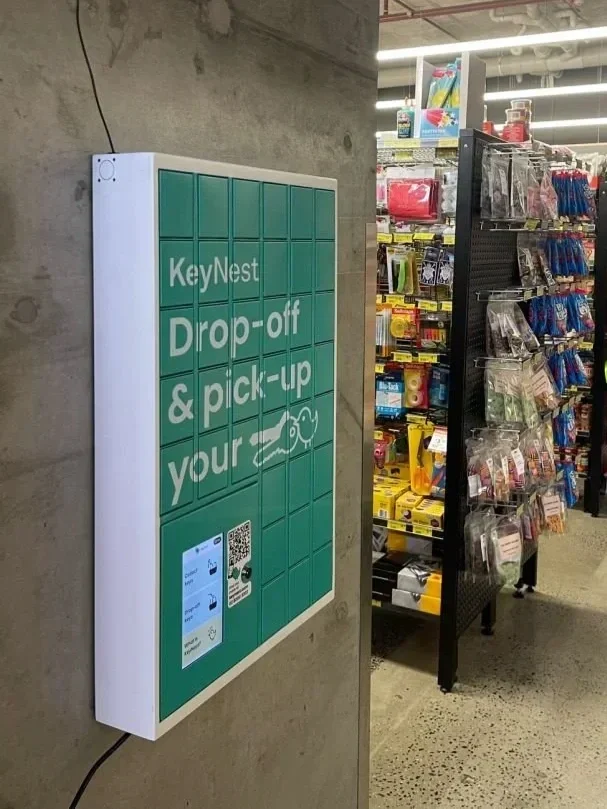
KeyNest keys are readily accessible from secure, smart lockers located in convenience stores close to the Airbnb or STR location, open 24/7 - if there are any issues at all, a 24/7 support line is always available to provide help where needed.
Is the high upfront cost of hardware worth the risk?
The Smart Lock Trap
A robust smart lock can typically cost hundreds, and that’s not including the cost of installation. For portfolios with multiple properties, the cost balloons significantly if you want to secure all locations with the same lock. Make sure to factor in expensive call-outs if a lock malfunctions, or if a guest damages it.
The KeyNest Advantage
There is no upfront hardware cost to utilise the KeyNest network. No installation is needed, as all you need to do is drop your key off at a nearby, chosen KeyNest destination. The pay-as-you-go model is meant to scale with your growing portfolio and business.
How do your guests get through the main building entrance?
The Smart Lock Trap
Smart locks are not suitable for individual unit doors in managed buildings - many building managers forbid the use of third-party hardware on communal doors. The guest's so-called keyless entry still requires some way to access the front lobby - completely defeating the purpose of a smart lock for guest convenience.
The KeyNest Advantage
KeyNest thrives in cities. Guests can pick up a key, and an access fob already attached to the key from one of our 24/7 partner shops. By using KeyNest’s network, STR and Airbnb hosts can fully automate the check-in process for any of their properties, whether in a managed building or gated complexes.
| Features | KeyNest Points | Smart Locks |
|---|---|---|
| Initial Cost | Zero | Hundreds per door |
| Installation | Instant (drop and go) | Requires tools and fitting to door |
| Apartment friendly? | Yes, lobby entrance fobs included | Rarely (Shared building limits) |
| Power Dependent? | No | Yes, batteries and Wi-Fi |
| Scalability | 7000+ available points | High maintenance/cost per door |
| Integration | Syncs with PMS to auto-send codes | Needs active Wi-Fi to sync codes |
Why is KeyNest Better Than The Other Smart Lock Alternatives?
Traditional methods like lockboxes, hidden keys, or in-person handovers are becoming obsolete. Most councils ban and remove lockboxes, hidden keys can void your insurance, and manual exchanges are impossible to scale.
KeyNest is the superior alternative, combining the security of vetted, 24/7 CCTV-monitored locations with the same digital automation as a smart lock. It is fully compliant with local regulations and provides an instant audit trail for every key movement.
The Smart Choice for Professionals
Despite it being in the name, smart locks aren’t the smartest choice for guest and host check-in convenience, especially for Airbnb and STR hosts with multiple-property portfolios.
KeyNest offers the automation that a smart lock provides but with the failsafe of an actual, physical key. No need to suffer from a hardware headache when you can rely on the KeyNest network.
FAQ
-
Yes. Unlike smart locks, KeyNest doesn't fail due to dead batteries, no Wi-Fi, or power cuts. It can also provide access to communal buildings that smart locks can’t.
-
Smart locks cost hundreds per door, more with installation. KeyNest eliminates these entry costs, as it uses a scalable, pay-as-you-go model - zero upfront hardware capital is needed when using KeyNest.
-
A failed smart lock will always require the host to physically intervene and visit the property. KeyNest has 24/7 access and support line, able to resolve issues without alerting the host.