

Over 1500 key exchange locations nationwide
KeyNest vs Traditional Lockboxes: The Definitive 2026 Comparison
Key Summary
- Enhanced Security - The KeyNest network replaces vulnerable traditional lockboxes with tamper-resistant lockers and CCTV-monitored environments.
- 100% Council Compliant - Avoids all recent 2026 public lockbox legislation fines.
- Real-time Tracking - KeyNest automatically provides a digital audit trail with automated notifications whenever keys are moved.
- Dynamic Access - Eliminates all code-sharing liabilities by using unique, one-time, 8-digit codes.
- Zero Maintenance - No codes to change and no new hardware installed at the property.
It’s 2026, and in a rental and property industry that is choosing to professionalise and modernise itself to prepare for growth, lockboxes are an obsolete key management solution. KeyNest is a professional key exchange network that provides 24/7 security and digital tracking, all while staying completely compliant with council regulations.
KeyNest vs Traditional Lockboxes
| Features | KeyNest Smart Lockers | Mechanical Lockbox |
|---|---|---|
| Security | Strong: Galvanised steel, tamper-resistant lockers. | Vulnerable: Simple tools can brute-force traditional mechanisms. |
| Tracking | Cloud-Synced: Real-time key movement notifications. | Offline: No way to track if the key is in the box or out. |
| Automation | Automated: Unique, one-time, 8-digit codes generated remotely. | Manual: Host must physically visit site to change access codes. |
| Convenience | Convenient: Secure kiosk, accessible 24/7, with 24h support. | Anxiety-inducing: Prone to mechanical faults in exterior environments. |
| Risks | Secure: Vetted locations and audit trails mitigate liability. | High Risk: Prone to burglary and often voids insurance policies. |
Are lockboxes secure enough for short-term rentals?
No, traditional lockboxes are often seen as a security liability, especially by insurance companies. It is a physical indication that there is something valuable in the box, easily noticed by thieves.
Despite some lockboxes advertised as ‘police-approved’, be wary that all lockboxes can be brute-forced, no matter how complex the mechanism. Whether it takes 2 minutes or 10 minutes, with enough effort, any lockbox can be broken into.
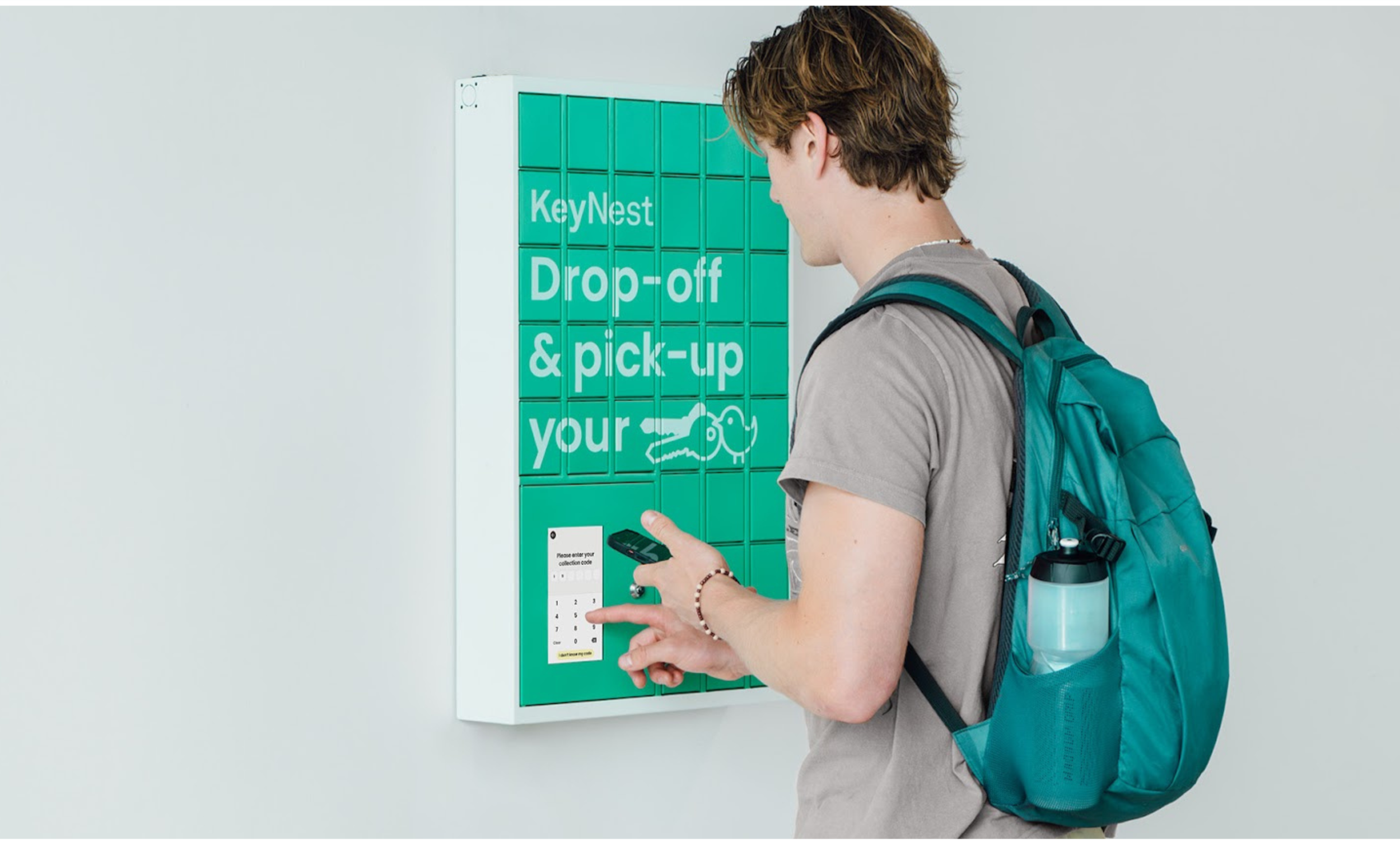
KeyNest completely eliminates this risk by storing keys in a secure, connected locker, only accessible via a unique, one-time collection code.
Why are cities and HOAs banning lockboxes?
In major cities, like Dublin and Melbourne, Councils are outright banning their presence and physically removing them from public spaces - hoping to make things harder for STR and Airbnb hosts by making their main source of key management illegal, in an attempt to regain control of their respective housing markets.
KeyNest solves the issue by transplanting the key exchange process into an indoors, partner location, like a 24/7 convenience store or petrol station, automatically complying to any Council regulations.
How do you track key movements with a lockbox?
You can’t. If you rely on a traditional lockbox, there is no way to know when a guest has checked out, or if a cleaner has come-and-gone, or where the actual key is located when not in the box.
KeyNest automatically provides a digital audit-trail. The moment a key is dropped off and scanned, you’ll receive an instant notification via smartphone or PMS. For management looking to coordinate tight turnarounds with cleaners and maintenance, the KeyNest network is essential.
What’s the cost difference between KeyNest and lockboxes?
A lockbox will have a one-time purchase price, but consider the hidden costs: lost keys, stolen hardware and the labor required to manually reset new codes after each guest.
KeyNest operations either with a flexible subscription model, or by pay-per-use - meaning there is no upfront hardware investment needed.
Reliability Over Obsolete Hardware
For a single property, on a private building in a rural, low-risk area, a lockbox will suffice. For professional property managers, and STR and Airbnb hosts who have properties in dense, urban environments, KeyNest is the superior choice.
The KeyNest key exchange network provides security, data and the ability to scale that traditional lock boxes just can’t match.
-
Key exchange networks are superior. Lock boxes are vulnerable to brute-force thefts - KeyNest uses monitored, secure smart lockers in 24/7 locations.
-
Councils say they are street-side clutter that can’t be attached to public property. KeyNest stays 100% compliant by moving the key exchange process indoors to 24/7 partner shops, avoiding all Council fines.
-
No. Lock boxes are purely manual, with no tracking ability whatsoever. KeyNest provides an automatic, digital audit trail that keeps the host in-the-know with instant notifications whenever a key is moved.