
Over 1500 key exchange locations nationwide
How Fleet Depots Track Which Driver Has Which Vehicle Key
KEY SUMMARY
- A key board and logbook work for a handful of vehicles, but become a guessing game once a depot runs dozens of vehicles across rotating shifts.
- A missing vehicle key delays jobs and deliveries, and makes it harder to answer who had access if a vehicle's involved in an incident.
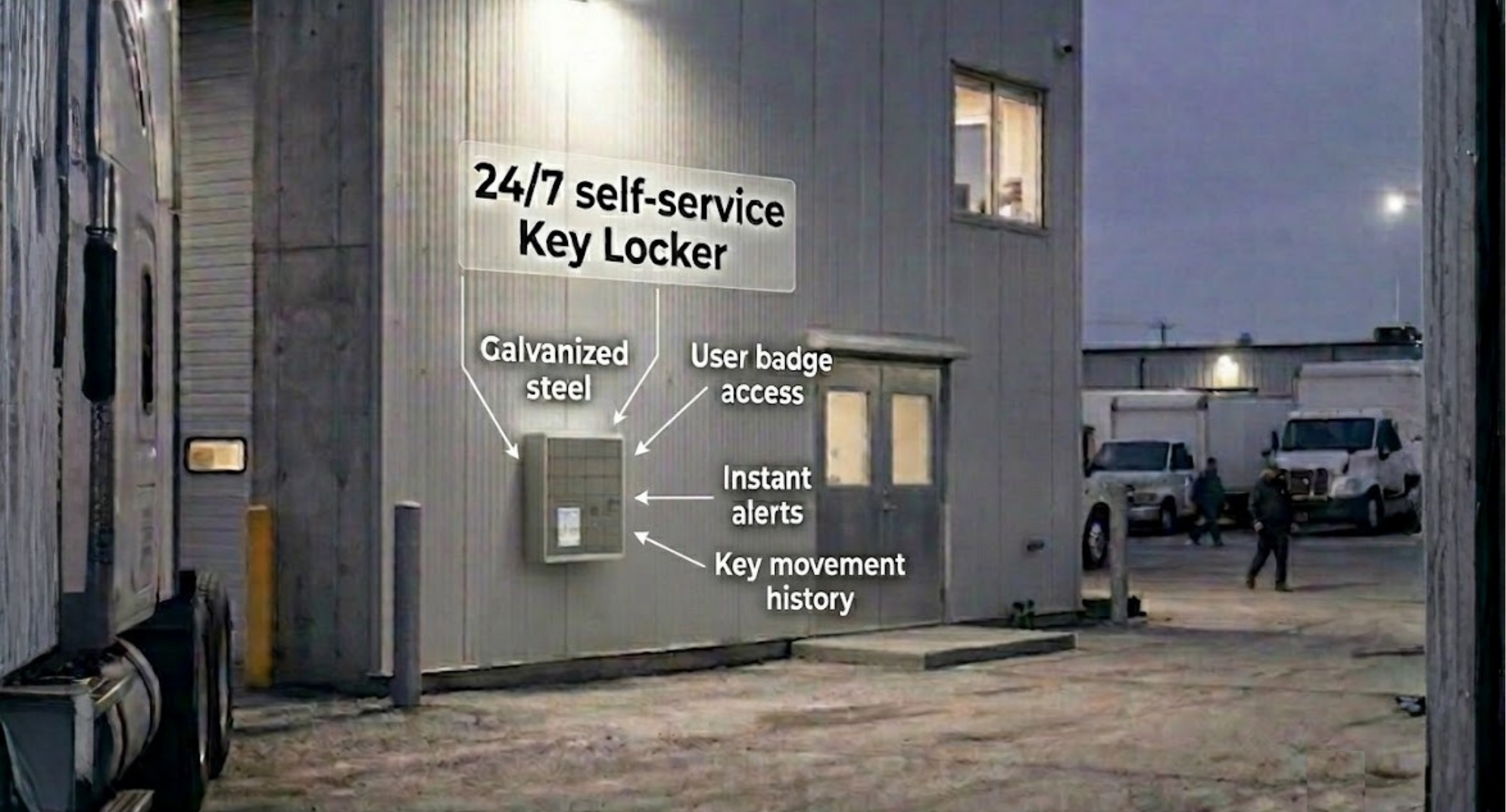
- A KeyNest Locker assigns access to the driver, not the hook, logging exactly who collected which key and when via their user badge.
- Access can be scoped to shift windows, so drivers only have access during their scheduled hours, with new or agency drivers added and removed in minutes.
A depot manager needs to know which van is out, with which driver, and when it's due back. The key cabinet on the office wall only tells them what's currently hanging there, not what's missing, or why, or who took it.
Fleet depots running more than a handful of vehicles across shift patterns quickly outgrow a hook board and a logbook. This is where a KeyNest Locker fits: every key collection is tied to a specific driver, logged automatically, with nothing relying on someone remembering to write it down, and no physical office presence needed to receive and hand out keys.
The Real Cost of Not Knowing
A missing vehicle key delays a job, a delivery, or a shift changeover. It also raises a harder question for larger fleets: if a vehicle's involved in an incident, who had access to that key, and when?
Without a reliable log, that's not always an easy question to answer, and can severely impact any potential insurance claim.
Why the Key Board Stops Working at Scale
A key board with a dozen hooks and a handful of drivers is manageable. The same setup with forty vehicles and drivers rotating across day and night shifts becomes a guessing game. Keys get taken without a note left behind, handed directly between drivers changing shifts, or simply not returned to the right hook.
By the time a vehicle's needed urgently, and its key isn't where it should be, the depot's already lost unnecessary time.
Assigning Access to the Person, Not the Hook
A KeyNest Locker replaces the keyboard and logbook altogether with individually tracked slots. A driver collects the key they need for their shift with their user badge, and the system logs exactly who took it and when.
When their shift ends and the key's returned, that's logged too, giving depot managers a live, accurate view of every vehicle's status rather than a snapshot of what's currently on the wall.
Managing Shift Patterns and Rotating Drivers
For depots running multiple shifts, access can be scoped to specific time windows, so a driver only has access to the vehicle key during their actual shift. New starters or agency drivers can be added quickly, and access removed the moment they're no longer scheduled, without needing to physically retrieve a key from them.
FAQ
-
Yes, access can be scoped to specific time windows so drivers only have access during their scheduled shift.
-
The dashboard shows the key is still checked out and to whom, so depot managers don't have to guess.
-
Yes, every collection and return is time-stamped and logged automatically.
-
Yes, new drivers can be added and given access in minutes, and removed just as quickly once they're no longer needed.
-
Yes, vehicle keys are stored in the Locker instead of on hooks, with access managed through codes or permissions rather than a manual sign-out process.