
Over 1500 key exchange locations nationwide
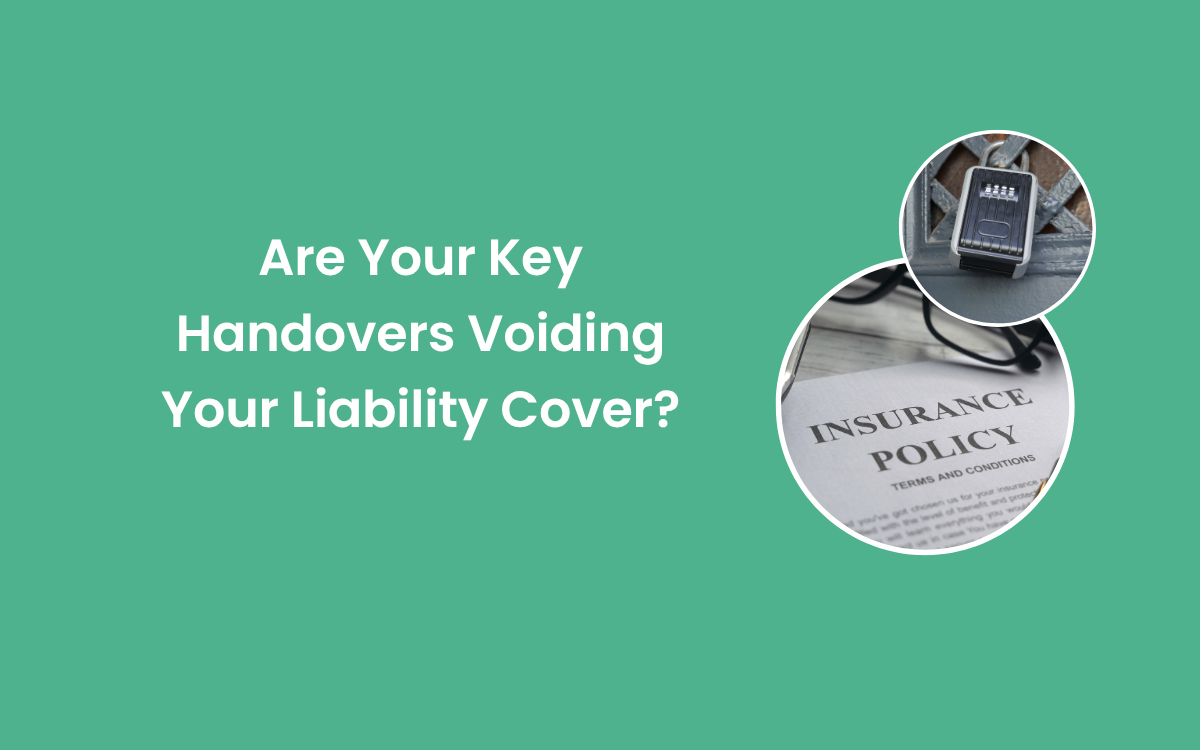
Are Your Key Handovers Voiding Your Liability Cover?
Key Summary
- Insurance Approval - The only solution approved by Yellow Bolts (formerly GuardHog); lockboxes and hidden keys now void policies for lack of due diligence.
- Forcible Entry Protection - Prevents the ‘no-sign-of-forced-entry’ claim denial. Since keys are tracked, insurers can't claim a lack of violent entry, like if a property is breached via a stolen or leaked code.
- Legally Defensible Audit - Provides Proof of Return via RFID scans - something smart locks can't do - proving the property was secured the moment a guest left.
- Anonymized Safety - Encrypted fobs contain no address data, ensuring a lost key doesn't lead a finder to your door or compromise your "duty of care."
- Zero Hardware Risk - Avoids voiding door warranties or breaching fire-safety codes, which are now a primary focus for 2026 insurance audits.
The UK’s National Registration Scheme and the EU’s Regulation 2024/1028 (starting from May 2026) are hurdles that short-term rental managers need to prepare for. Short-term rental insurers have taken steps to tighten the language around ‘unsupervised access.’
Lockboxes, hidden keys and some smart locks have now become a significant liability issue. KeyNest is the key handover solution that bridges the gap between operational convenience and 2026 insurance compliance.
Why Are Traditional Key Exchange Methods Voiding Insurance Policies?
Prominent short-term rental insurance providers, like Yellow Bolts (formerly known as GuardHog), have changed their wording to categorise ‘untracked keys’ as a failure of due diligence.
The Forced Entry Trap - Policies will only pay out if a burgled property suffered from ‘forcible and violent entry.’ If someone found your hidden key, or if a patient thief figured out the lockbox code, and used the discovered key to enter through the front door, your claim for stolen content or malicious damage will be denied.
The Lockbox Liability - In many major cities, like Paris, Milan and Dublin, public lockboxes are now illegal street furniture (and also result in fines up to the thousands). By continuing to use outlawed hardware to manage key handovers, insurers can cite it as a breach of your legal compliance.
No Proof of Return - Smart locks only tell you when a door is unlocked, they don’t tell you if a guest left keys behind or in a safe space. Without proof that keys were actually exchanged and returned, hosts cannot prove to their insurers that the property was secured after a guest leaves.
How does KeyNest Protect Your Insurance Policy?
Every detail regarding how KeyNest operates will satisfy the ‘duty of care’ requirements demanded by 2026 STR insurers.
1. Verified Custody - KeyNest is the only key exchange solution approved by GuardHog (underwritten by Hiscox). Keys are stored in vetted, CCTV-monitored businesses, in tamper-resistant smart lockers, helping meet the highest security tier.
2. Digital Proof of Return - Every key movement is automatically tracked and recorded. The KeyNest system creates a timestamped, legally defensible record that the property was secured when guests leave - vital for claims that involve burglaries in unoccupied periods.
3. Anonymised Security - KeyNest fobs are anonymised - if a KeyNest key is dropped or misplaced on the way back to a Point, there is no visual identification on the key for which property it belongs to, eliminating any chance of an easy-target burglary.
4. One-Time Codes - KeyNest collection codes are time-sensitive, 8-digit codes that prevent any chance of code leak - an issue common with traditional lockboxes, where third-party contractors and cleaners could still have access weeks after their service is over.
| Features | KeyNest Points | Smart Locks |
|---|---|---|
| Setup Cost | Zero | Hundreds, more if applying to a large portfolio |
| Maintenance | Zero | High (battery changes and software updates) |
| Reliability | 100%, available from 24/7 partner stores | Entirely dependant on strong Wi-Fi to function |
| Compliance | Fully council and leasehold compliant | Often breaches HOA and impacts fire-safety regulations |
| Insurance | Automated audit trail to demonstrate functional key exchange | Commonly requires high premiums |
The 2026 Due Diligence Checklist
When an insurer audits your short-term rental business, they look for three things:
Supervised Custody: Was the key handed over in a monitored environment? (KeyNest: Yes).
Traceability: Is there a record of the key being returned? (KeyNest: Yes).
Physical Security: Was the access method compliant with local bylaws? (KeyNest: Yes).
Using a street lockbox fails all three tests, giving insurers an immediate out during a claim.
-
Yes. Attaching a lockbox to public property is a legal violation in some cities that insurers will use to deny your claims. It’s also a security risk that can be easily broken into with simple tools.
-
Yes. KeyNest provides timestamped digital evidence. These logs are a legally defensible record of the exact second a key was returned, serving as ample evidence for a guest’s liability.
-
Yes. Tech-savvy thieves can easily spoof smart locks with no trace of forcible entry for your claim. KeyNest keeps the physical key in a monitored, nearby, 24/7 access location until a guest arrives.
-
KeyNest uses one-time access codes unique to each booking, preventing the code-leaking tendencies common with lockboxes. KeyNest RFID fobs attached to every key are highly secure and nearly impossible to clone.
-
No. KeyNest requires zero hardware modification. By not drilling or installing anything to a door, you completely avoid voiding manufacturer warranties or compromising fire-safety ratings - absolutely critical for 2026 insurance audits.
-
KeyNest fobs are fully anonymised. With no address attached, the keys are useless to a finder, preserving your insurance "duty of care" and preventing unauthorized entry.
-
Yes. The digital audit trail provides legally defensible timestamps of every entry and exit. This data is vital for insurers to determine exactly who was in the property when damage occurred.